
14 July 2026
We rebuilt the test chamber, and the numbers moved
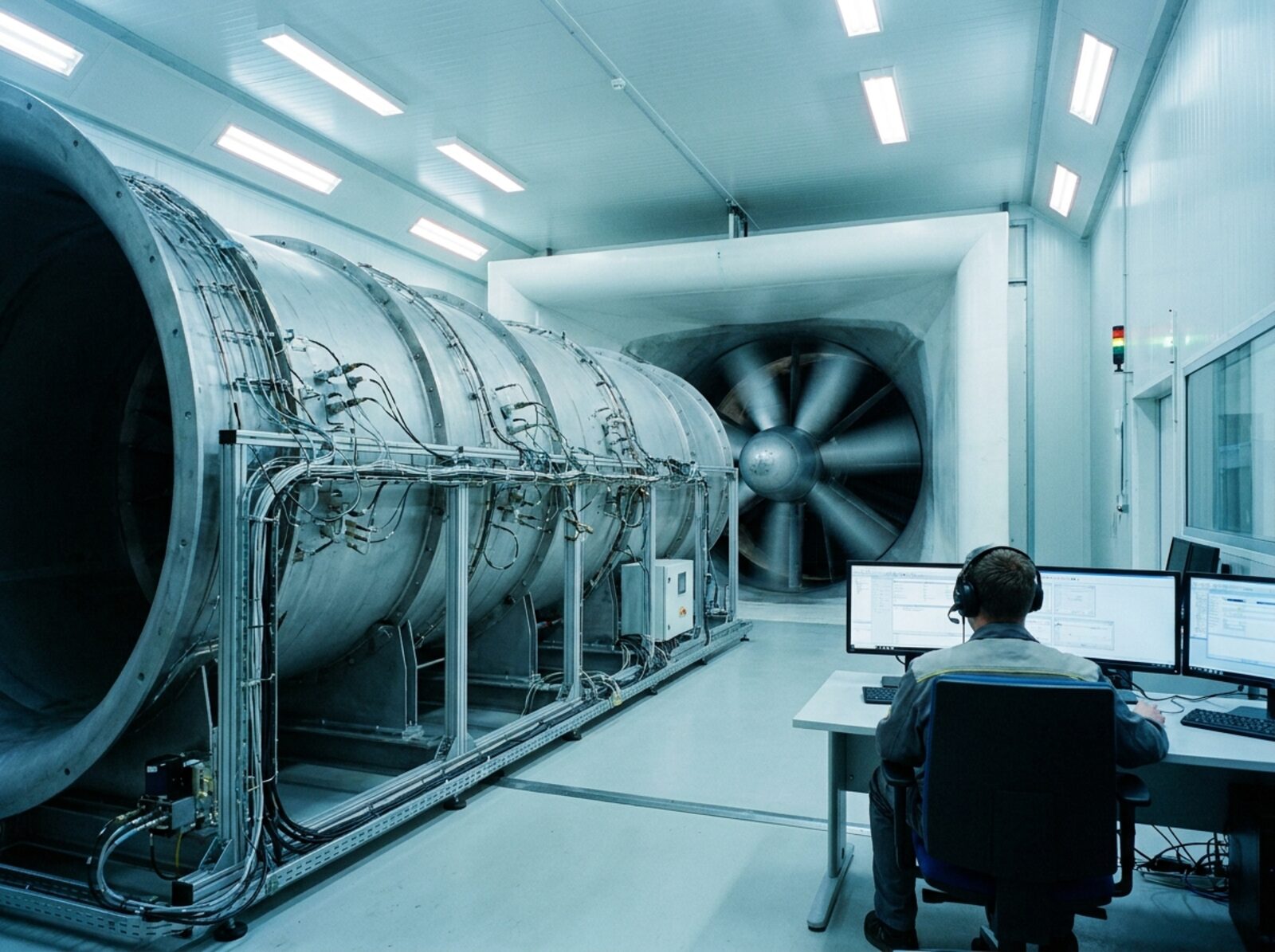
A new inlet plenum, calibrated nozzles and a properly conditioned upstream length. Two published curves changed as a result, and we reissued them.
Our test chamber dated from 1996 and was, to be blunt, out of date. It measured well enough to sort a good fan from a bad one, but the uncertainty band was wider than we were prepared to admit in writing, particularly at the low-flow end of the curve where the stall region matters most.
The rebuild took eleven weeks. It added a proper inlet plenum with a settling length ahead of the calibrated nozzles, replaced the pressure instrumentation, and gave the chamber a conditioned upstream duct length that meets ISO 5801 without the correction factors we had been carrying.
The honest outcome: two of our published curves moved. One centrifugal range read about 3% optimistic on static efficiency between 40% and 60% of free delivery, and one axial range was slightly pessimistic at full pitch. We reissued both, wrote to everyone holding a live quotation against them, and honoured the old figures on three orders where the difference mattered. It is not a comfortable letter to send. It is a much less comfortable phone call to receive at commissioning.
More from Kestrel
Also written
19 June 2026
Why we now model every impulse scheme before we quote it
Two schemes in five years had a dead zone that nobody predicted from a plan view. Modelling costs us about a day and it has stopped both arguments happening again.

5 May 2026
Holding spares for fans we sold in 1998
Bearings, belts, impellers and motor frames for every fan built in the last twenty-eight years. The commercial argument for it is worse than you would think, and we are keeping it.
Next step
Send us the duty and we will send back a curve
Volume, static pressure, air temperature and what is in it. If you only have two of those, ring us and we will work out the rest.