
Manufacturing
One building, Templeborough
4,900 square metres, 38 people, and a plate laser at one end with a paint bay at the other. Everything that decides how long a fan lasts happens between those two doors.
What we do here
Welded, not assembled
- 3 kW fibre laser, plate to 20 mm
- Four-metre press brake and a 3 m plate roll
- Six coded welders, BS EN ISO 9606-1
- Two CNC vertical machining centres
- Dynamic balancing to 1,600 mm diameter
- Shot blast and two-pack paint bay on site
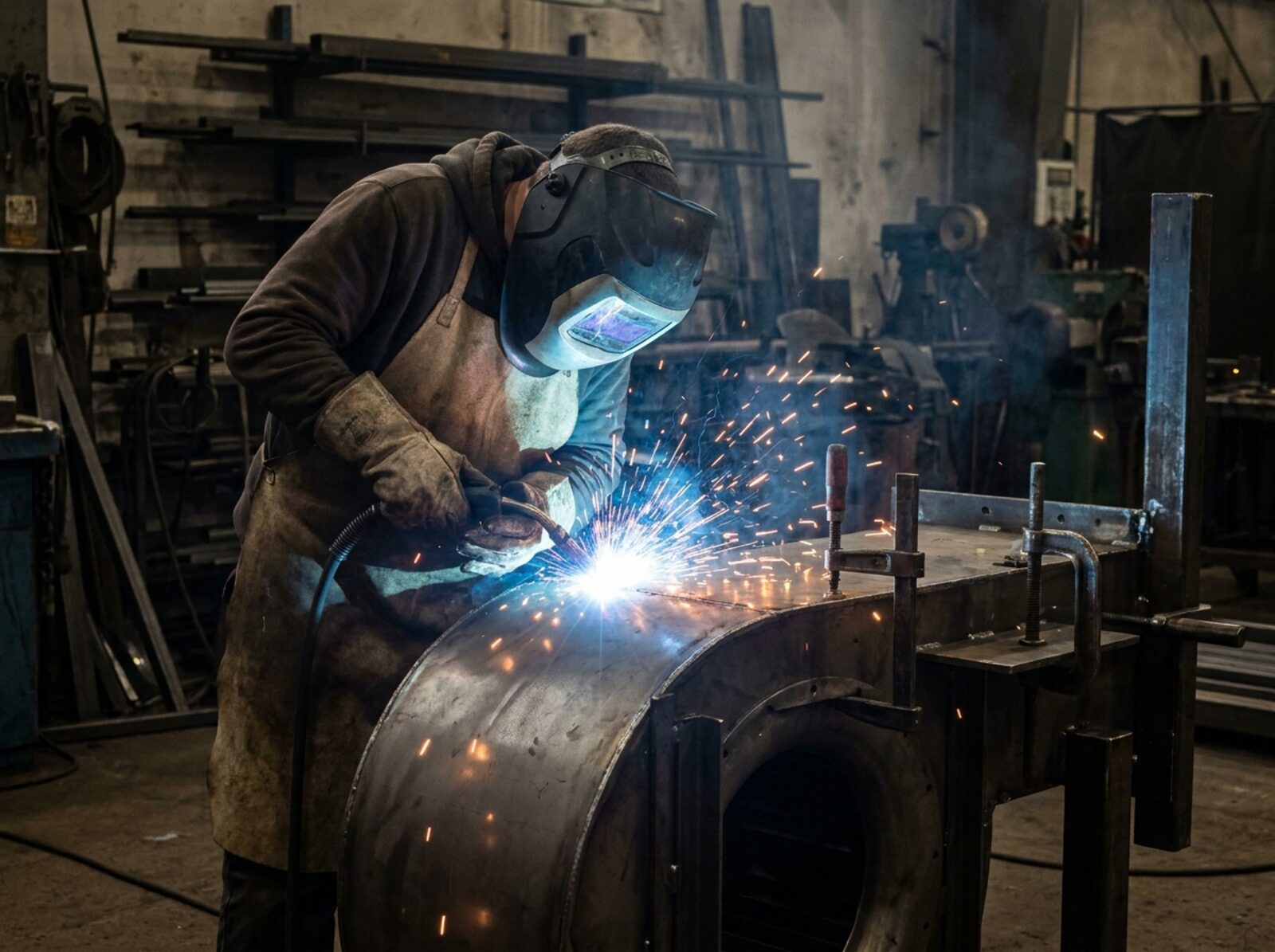
A fan casing can be made two ways. You can press panels, bolt them to a frame and seal the joints, which is fast and cheap and produces a structure that starts to hum at the blade passing frequency once the sealant has aged. Or you can cut, roll and weld it as a monolithic scroll, which costs more in hours and does not do that.
We do the second. Casings are laser-cut from plate, rolled, welded by coded welders to a procedure we hold on file, and stress-relieved where the section warrants it. Weld inspection is visual to 100% and dye-penetrant on any weld carrying structural load, which is recorded against the works order.
Impellers are machined on our own vertical centres and balanced on our own machine. This is the part of the process most commonly subcontracted in this industry and it is the part that decides whether the fan is still quiet at 40,000 hours. We are not sending it out.
Paint is a two-pack epoxy over shot-blast to SA 2½, 120 microns dry film as standard and 250 for marine or coastal work, measured with a gauge rather than assumed.
- 4,900 m²
- Under one roof
- 38
- People, including six coded welders
- 1,600 mm
- Largest impeller balanced in-house
- 11 t
- Heaviest unit shipped, 2025
Lead times
What we will actually commit to
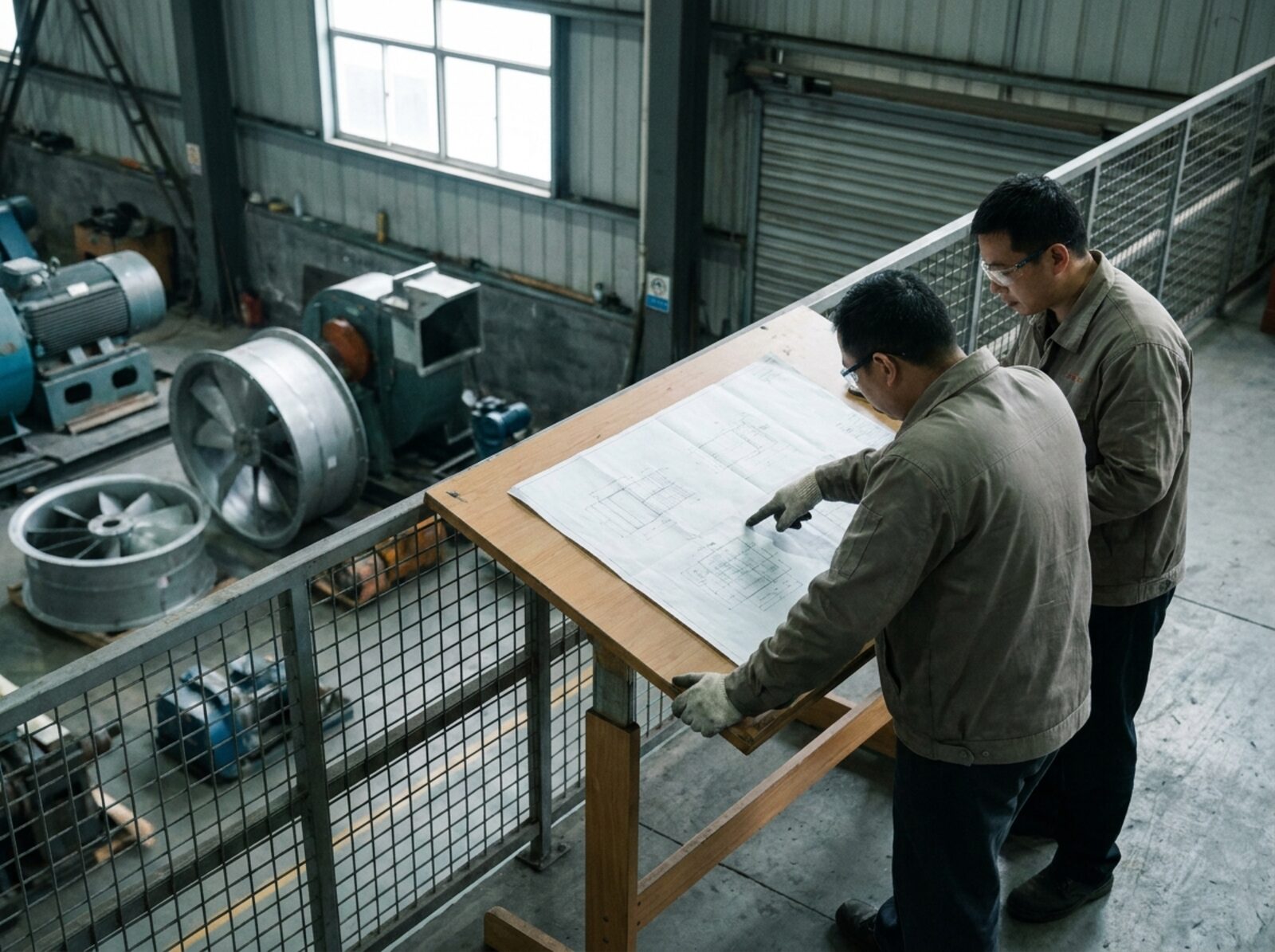
Standard ranges from stock components: four to six weeks. Specials, coated or stainless work, and anything ATEX: eight to fourteen. Smoke extract units where we already hold the certificate: six to eight.
Those are the figures we put on a works order, not the figures we put in a brochure. Our on-time record against the promised date was 94.6% across 2025, and the eleven late orders were late by an average of four days. We publish the miss rate because a lead time without one is a wish.
If your programme is tighter than the range allows, say so at enquiry. We can sometimes pull a build forward by starting the casing before the motor arrives, and we would rather do that deliberately than be asked at week five.
Next step
Send us the duty and we will send back a curve
Volume, static pressure, air temperature and what is in it. If you only have two of those, ring us and we will work out the rest.