
Fan ranges
Centrifugal fans
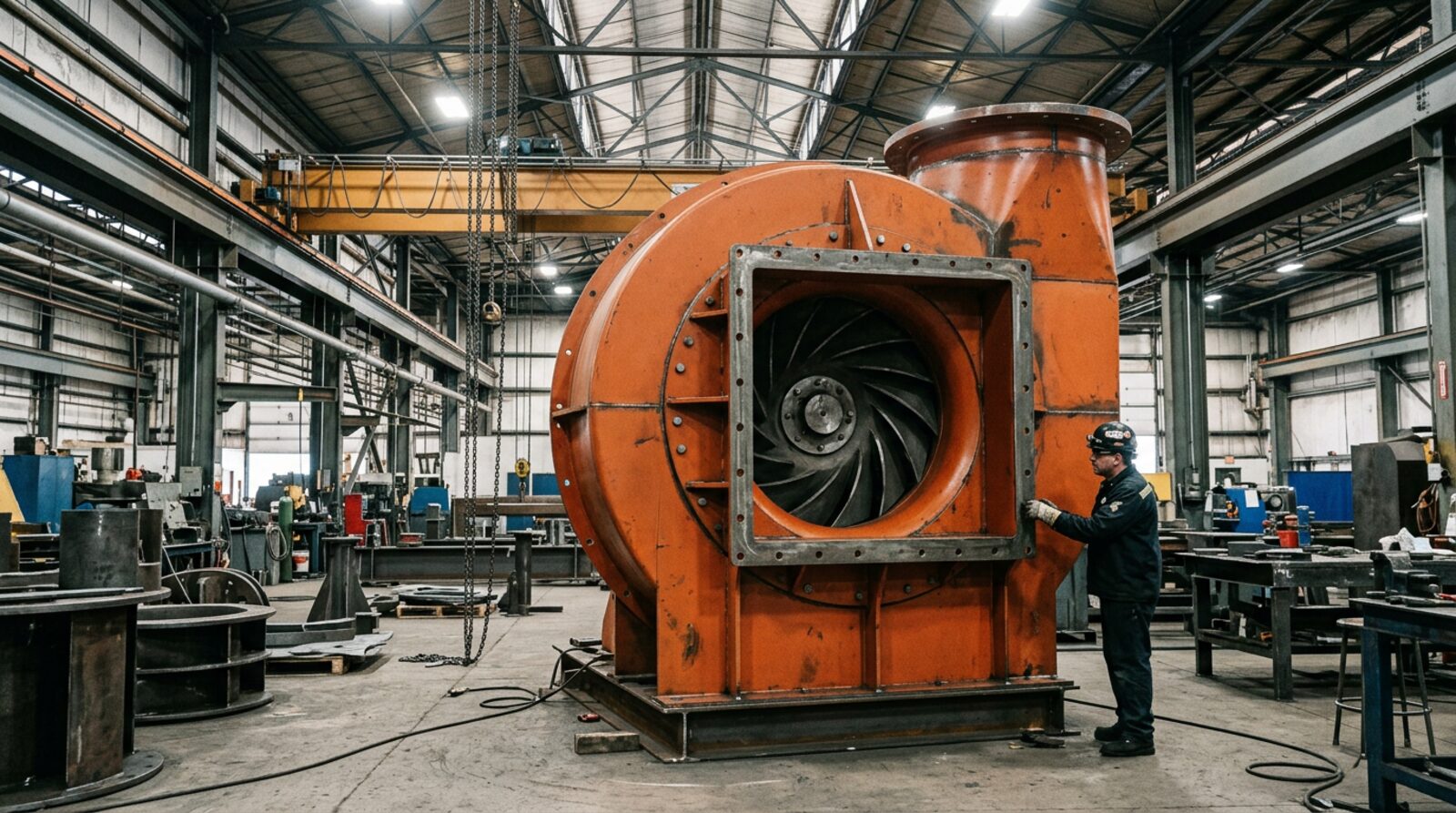
The workhorse of the range. Welded steel casing, a balanced impeller machined in Rotherham, and a duty point we will prove on the test rig before it leaves.
The range
Centrifugal fans
- Nine casing sizes, three impeller families
- Welded steel casing, not pressed panels
- Balanced to ISO 21940 G2.5 as standard
- Direct drive or belt drive, either hand
- ATEX Zone 1 and Zone 2 variants
- Inverter-rated motors from stock
A centrifugal fan turns shaft power into pressure more efficiently than any other arrangement, which is why it still does most of the heavy lifting in industrial ventilation forty years after everyone predicted it would be replaced. Air enters along the shaft, is thrown outward by the impeller, and leaves the scroll at right angles to where it came in — and that change of direction is what buys you pressure.
We build them in nine casing sizes with three impeller families. Backward-curved blades for anything where efficiency matters and the air is clean; forward-curved where you need volume from a small casing and can accept the steeper power curve; and open paddle for dust, swarf, shavings and anything else that would clog a closed impeller within a month.
Every casing is welded rather than bolted from pressed panels. It costs more and it is the reason our fans do not develop the low-frequency drumming that a panel casing picks up after a few thousand hours. Impellers are dynamically balanced to ISO 21940 grade G2.5 as standard and G1.0 on request, which matters more than most specifications admit: a fan that is out of balance destroys its own bearings and then the building steel it is bolted to.
Numbers
Envelope
Ranges are the built envelope, not a marketing maximum. Duties near the edge get a measured curve before we quote.
| Volume range | 0.4 – 63 m³/s |
|---|---|
| Static pressure | Up to 8,000 Pa |
| Impeller diameter | 250 – 1,600 mm |
| Peak total efficiency | 84% |
| Casing material | Mild steel, 316 stainless, or coated |
| Air temperature | −20°C to +200°C continuous |
Also built here
Other ranges
Axial fans
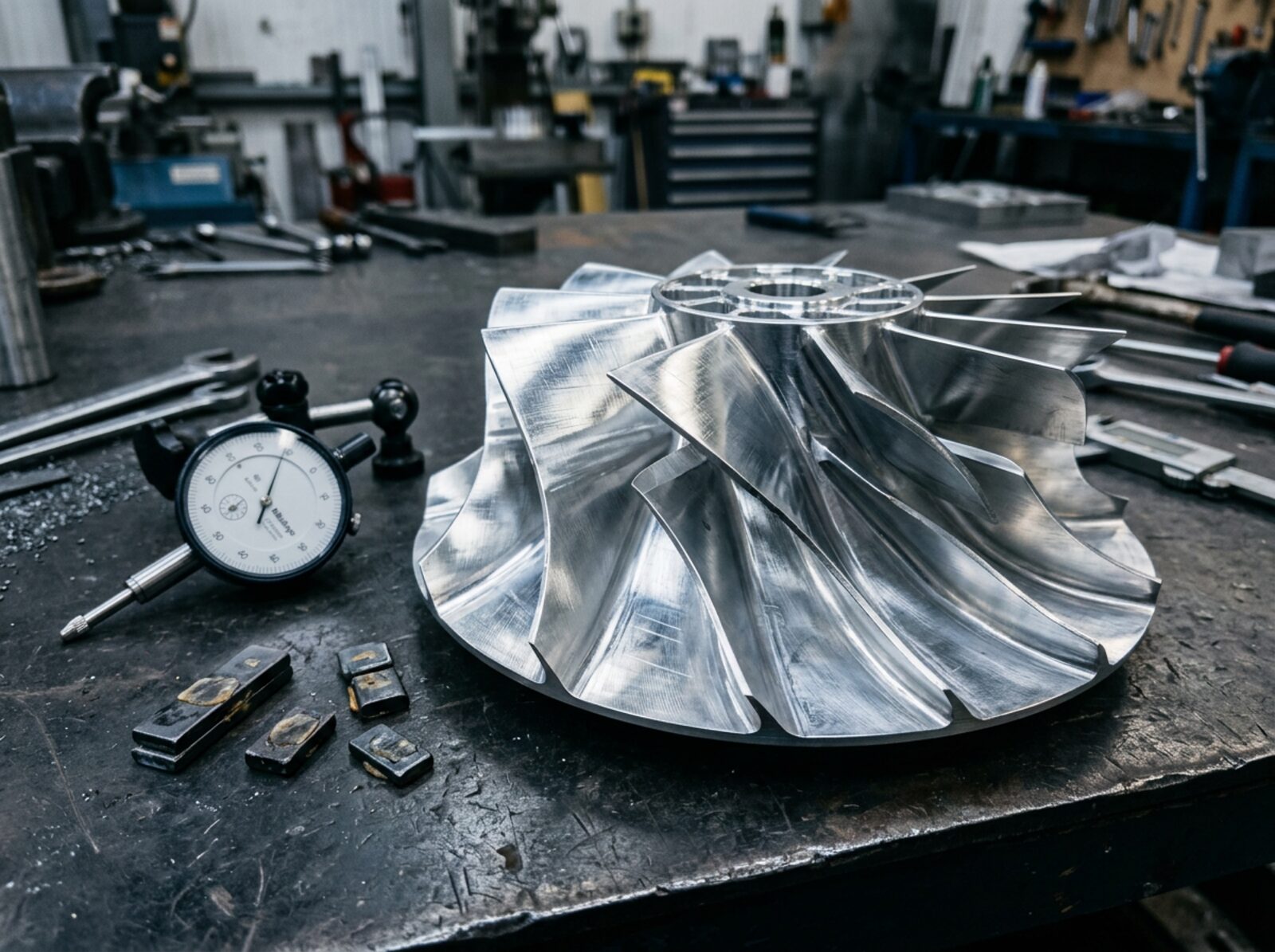
Cast aluminium aerofoil impellers with adjustable pitch, in short or long cased bifurcated arrangements to 90 m³/s.
Specification →
Smoke extract fans
F300, F400 and F600 rated to EN 12101-3, third-party certified, with the certificate numbers on the nameplate.
Specification →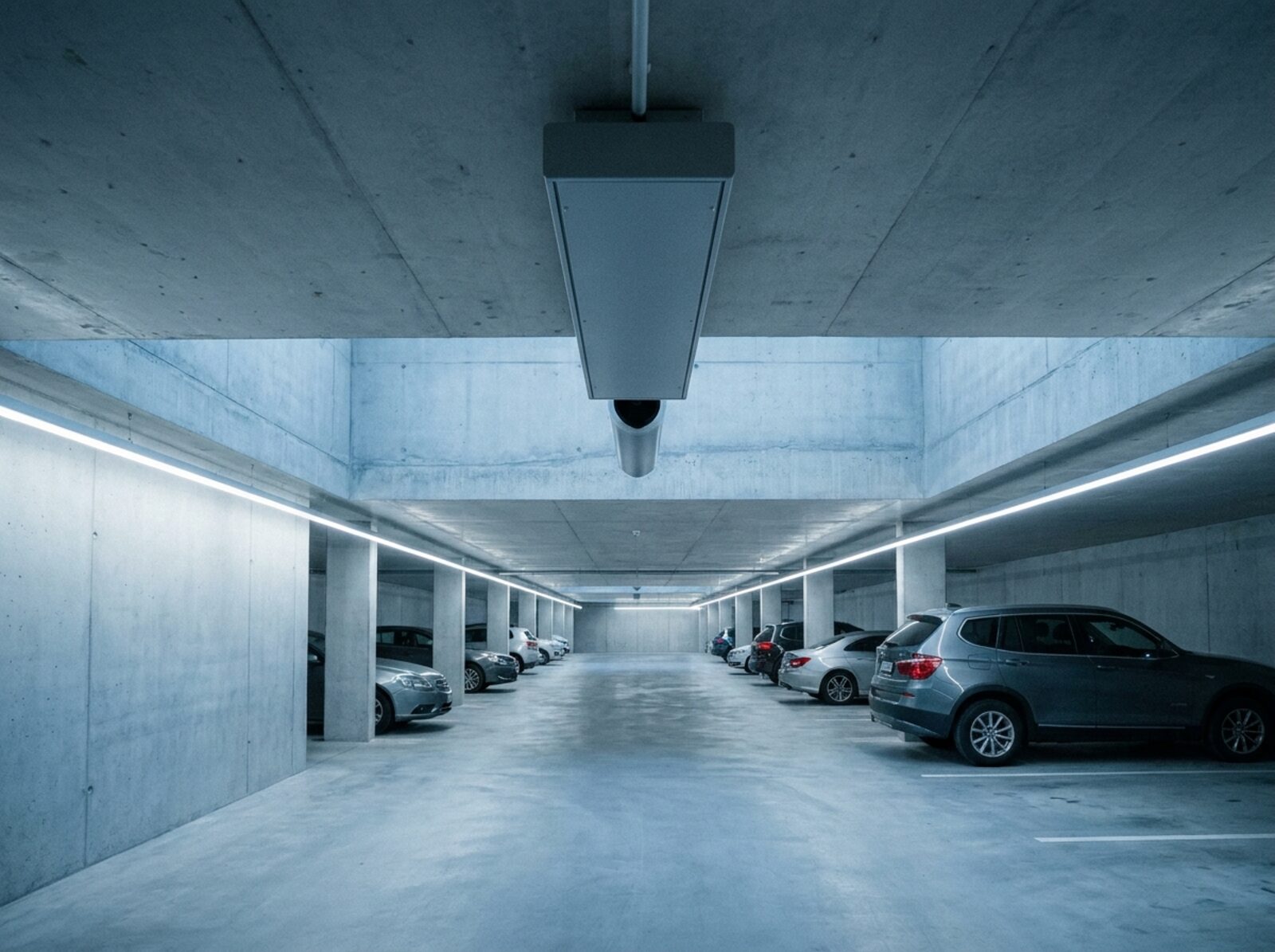
Jet & impulse fans
Induction ventilation for car parks and tunnels — thrust from 30 to 120 N, reversible, with the CFD model to justify the layout.
Specification →Next step
Send us the duty and we will send back a curve
Volume, static pressure, air temperature and what is in it. If you only have two of those, ring us and we will work out the rest.